Natural Medicine vs Modern Medicine: What’s Better? (A Complete Guide)
When it comes to healthcare, one debate
keeps coming up:
natural medicine vs modern medicine — which is better?
Some people prefer herbal remedies and
traditional healing systems like Ayurveda, while others trust scientific
treatments and pharmaceuticals.
The truth isn’t as simple as picking one
side. Let’s break it down clearly so you can make smarter health decisions.
🌿 What
is Natural Medicine?
Natural medicine refers to treatments derived from nature—herbs, plant-based
remedies, and holistic practices. Popular systems include:
- Ayurveda
- Naturopathy
- Homeopathy
- Traditional Chinese Medicine
These methods focus on healing the root
cause rather than just suppressing symptoms.
✅ Benefits of
Natural Medicine
- Fewer side effects (when used correctly)
- Improves overall lifestyle and wellness
- Focus on prevention and immunity
- Long-term health benefits
❌ Drawbacks
- Slower results
- Limited scientific validation in some cases
- Not suitable for emergencies
📌
Example:
If someone has chronic digestion issues,
Ayurveda may recommend:
- Triphala
- Dietary changes
- Daily routine adjustments
This approach works gradually to fix the
underlying imbalance.
💊 What
is Modern Medicine?
Modern medicine (allopathy) is based on scientific research, clinical trials, and advanced
technology.
It focuses on quick, targeted treatment
of diseases and symptoms.
✅ Benefits of
Modern Medicine
- Fast and effective results
- Essential for emergency care
- Strong scientific evidence
- Advanced diagnostic tools
❌ Drawbacks
- Possible side effects
- Often treats symptoms, not root causes
- Can lead to dependency on medication
📌
Example:
If someone has a bacterial infection,
doctors prescribe:
- Antibiotics
This can cure the infection
quickly—something natural remedies may not handle effectively in time.
⚖️ Natural
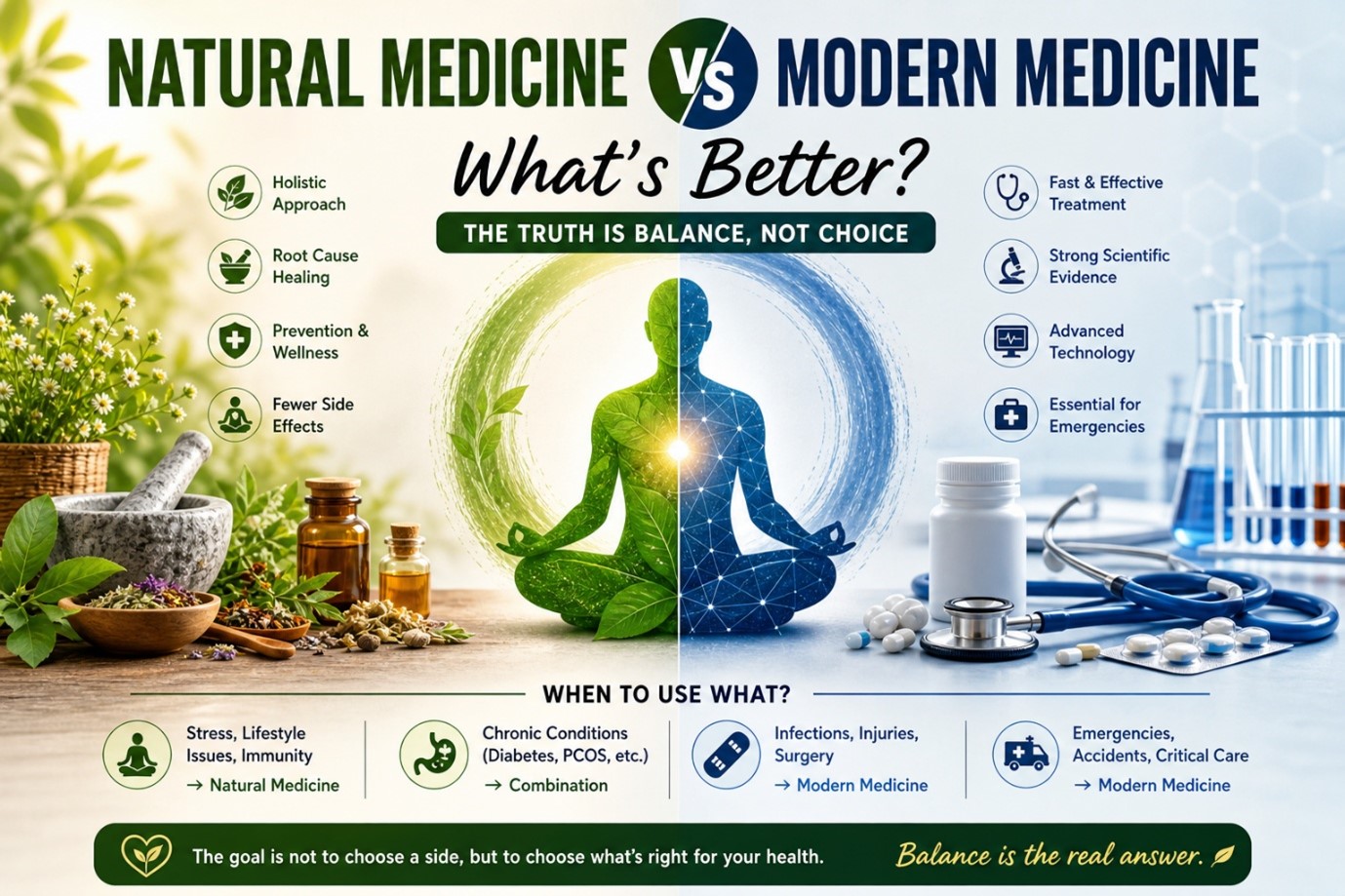
Medicine vs Modern Medicine: Key Differences
|
Factor |
Natural Medicine |
Modern Medicine |
|
Approach |
Holistic |
Symptom-focused |
|
Speed |
Slow |
Fast |
|
Side Effects |
Minimal (generally) |
Possible |
|
Scientific Backing |
Limited (in parts) |
Strong |
|
Best For |
Chronic issues, prevention |
Acute conditions, emergencies |
🧠
Real-Life Use Cases
Understanding when to use each approach is
what actually matters.
1. Stress & Anxiety
- Natural: Yoga, meditation, Ashwagandha
- Modern: Anti-anxiety medications
👉 Best
approach: Start natural, escalate if needed
2. Common Cold
- Natural: Herbal teas, steam inhalation, rest
- Modern: OTC medicines for symptom relief
👉 Best
approach: Natural remedies usually work fine
3. Severe Infection
- Natural: Supportive care only
- Modern: Antibiotics, hospitalization
👉 Best
approach: Modern medicine is critical
4. Lifestyle Diseases (Diabetes, PCOS,
Obesity)
- Natural: Diet, exercise, herbal support
- Modern: Medication, insulin
👉 Best
approach: Combination of both
🔍 Which
is Better: Natural or Modern Medicine?
The honest answer: it depends on the
situation.
- For prevention and long-term health → Natural medicine
works well
- For emergencies and serious conditions → Modern medicine
is essential
Trying to rely on only one system can limit your outcomes.

⚠️ Common
Mistakes to Avoid
- Assuming “natural” always means safe
- Ignoring medical treatment in serious conditions
- Overusing medicines for minor issues
- Self-medicating without proper guidance
These mistakes can do more harm than good.
🧩 The
Best Approach: Integrative Healthcare
The smartest strategy is integrative
medicine—combining both approaches:
- Use natural methods for daily health and prevention
- Use modern medicine when quick or critical treatment is needed
This gives you the best of both worlds.
💡 Final
Thoughts
The debate of natural medicine vs modern
medicine isn’t about choosing sides.
It’s about using the right tool at the
right time.
If you focus only on pills, you ignore
prevention.
If you rely only on natural remedies, you risk delays in serious conditions.
👉 Balance is the real answer.